Day 5 - Penang: Mistimed & Overfed in Penang
Slipping Through Time, Cake Crumbs, and Confused Tour Guides – My Peranakan Day in Penang
- Breakfast at Namkeng Hotel
- Ome By Spacer Bar
- The Blue Mansion of Cheong Fatt Tze
- Peranakan Mansion
- Norm Micro Roasters
- Ming Xiang Tai Pastry Shop
- Kebaya Dining Room
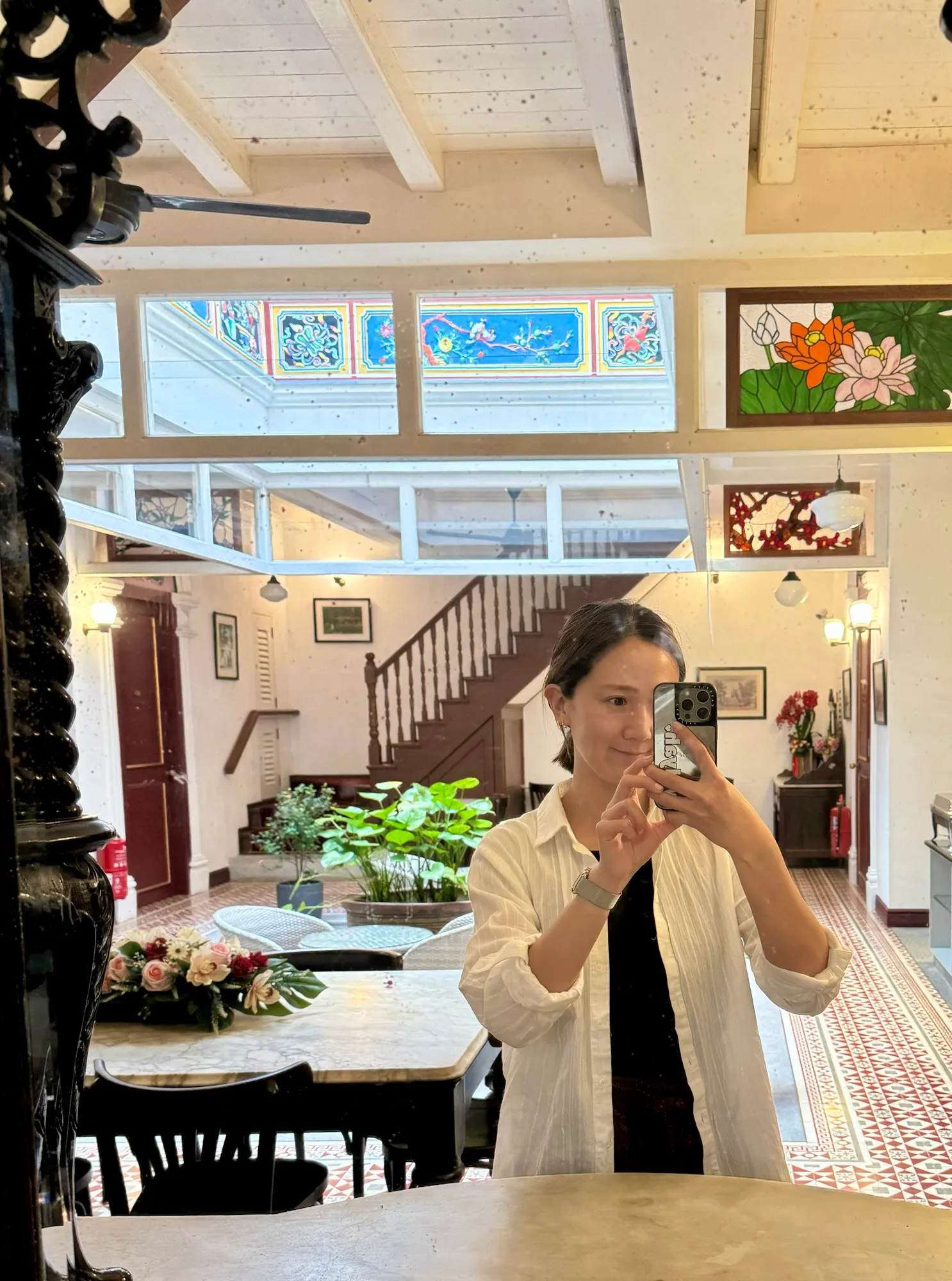
Waking up on my second day in Penang at the charming Nam Keng Hotel felt like I’d sleepwalked straight into a time machine—one with seriously good interior design. Staying in this beautifully preserved Peranakan house wasn’t just a place to crash; it was a full-on immersive experience, like living in a Wes Anderson set designed by a Straits Chinese grandma with impeccable taste. Every carved detail, tile, and antique whispered a story. And today? I was ready to dive headfirst into more of that Peranakan magic—Blue Mansion, I’m lookin’ at you.
But first: breakfast.
I started my morning in Nam Keng’s sun-drenched ground floor courtyard, where the vibe was as easy-breezy as the morning light filtering through the shutters. The breakfast spread was small but mighty—no stress, no “which of these 57 items do I want?” meltdown. Just a tight little lineup of local bites that let me taste Malaysia without even leaving the building (perfect for pre-coffee indecisive me).
They served up a buffet-style mix: soft and chewy kueh, a classic nasi lemak, toast, doughnuts, scrambled eggs, veggies, sausages, roti with curry—the works. I kept it local and went straight for nasi lemak and some colorful kueh. No regrets, just sambal.
With a happy belly, I headed to a café I’d bookmarked ages ago—because no adventure begins without caffeine. Penang’s coffee scene has been buzzing lately, and given Malaysia’s deep kopitiam roots, I was curious to see how the new wave was brewing.
Ome By Spacer Bar
The café vibe? Instantly welcoming. None of that cold, clinical minimalism or baristas that look like they judge your latte order—just warm energy, soft chatter, and air-con bliss. I’ll dive deeper into this spot in my coffee page but spoiler alert: the coffee was on point, and the cake? A soft, sweet surprise that had me planning my return visit before I even finished the last bite.
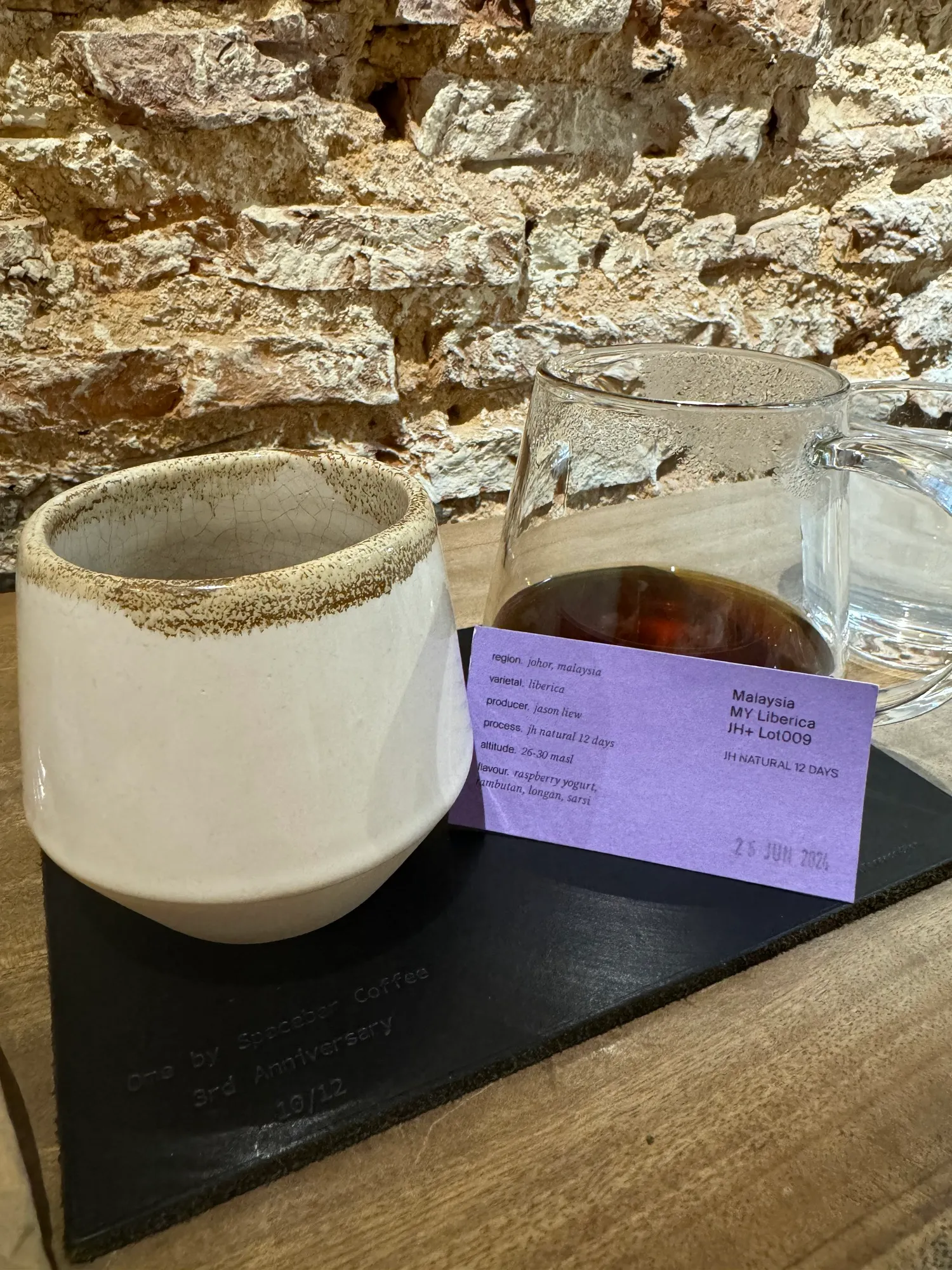
So there I was, caffeinated and caked-up, living my best café life… until I glanced at the clock.
Cue dramatic music: I was LATE for my tour at the Blue Mansion.
I downed the last sip of coffee, packed up my dignity, and power-walked through George Town like a woman on a mission. Sweat forming, heart racing—I arrived at the gates of Cheong Fatt Tze Mansion… only to discover I wasn’t late at all.
I was an entire hour early.
The friendly uncle at the gate gave me a puzzled look like, “This one’s very enthusiastic,” and honestly, fair. I could’ve been back at the café, basking in AC and cake crumbs. SOB.
But since I was already there, I decided to wander around the area for a bit, soaking in the old-world charm and street art corners of George Town. And finally, when the time was actually right, I stepped through the indigo walls of the Blue Mansion—ready to get lost in another slice of Penang’s rich Peranakan past.
The Blue Mansion of Cheong Fatt Tze
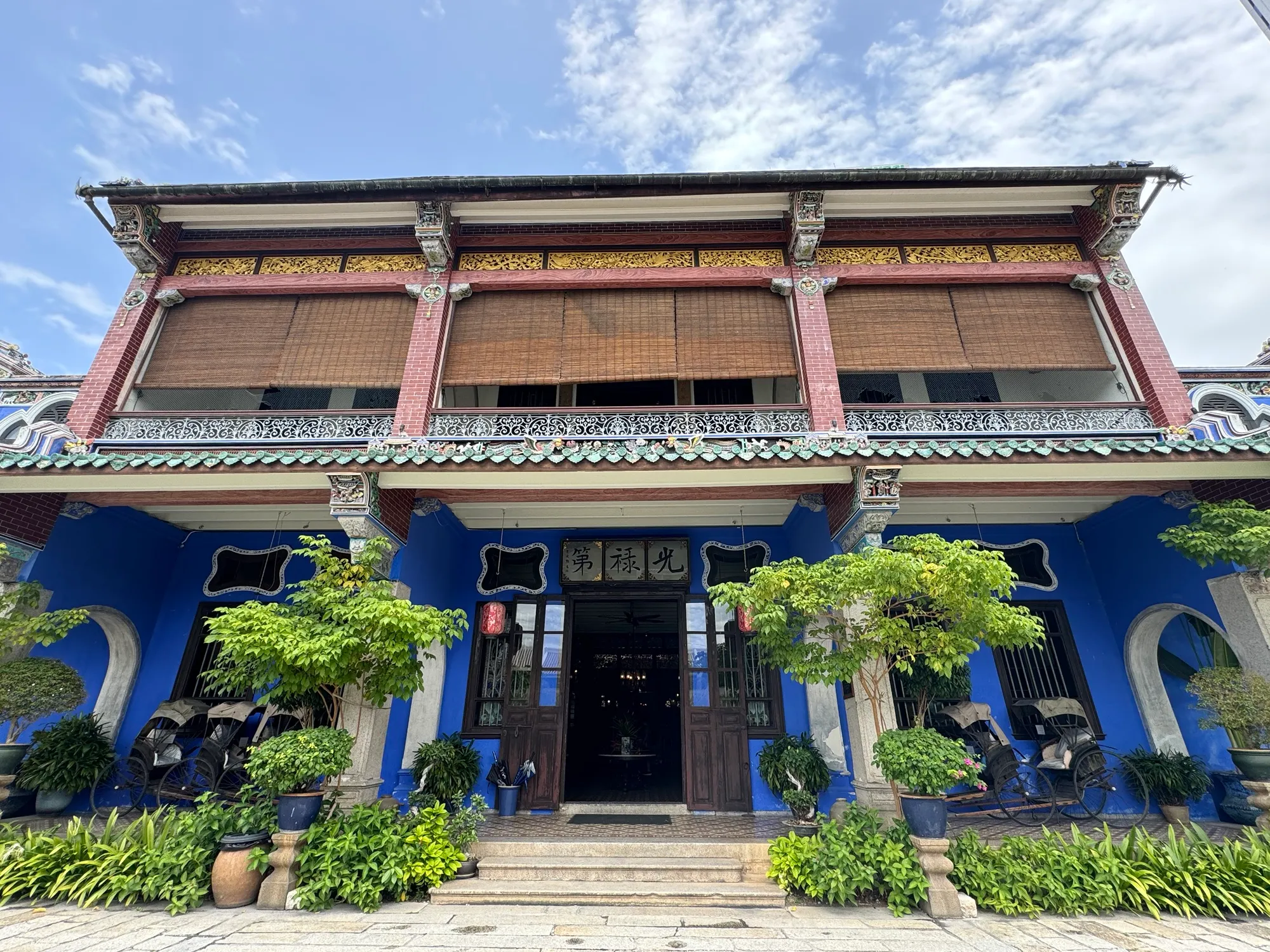
The Blue Mansion - a place so blue and bougie. Tucked in George Town, this iconic indigo dream was built in the late 1800s by Cheong Fatt Tze, a self-made millionaire, diplomat, and all-around boss. Picture this: a Chinese tycoon with champagne taste and a flair for East-meets-West glam. The mansion’s got it all—ornate Chinese carvings, English tiles, Scottish cast iron, and feng shui so on point it could realign your chakras.
With 38 rooms, 5 airy courtyards, and enough photo ops to max out your storage, this place isn’t just a building—it’s a vibe. Once a family home, it’s now a boutique hotel and museum, so yes, you can sleep where history happened (and maybe channel some tycoon energy of your own).
Cheong Fatt Tze—let’s call him CFT—wasn’t just building a home; he was making a bold, blue statement. He showed off the East’s wealth and elegance while making sure his British guests felt right at home.
Take the mansion’s two entrance gates: one in traditional Chinese style, the other in British colonial fashion. Why settle for one when you can have both? It’s a cultural handshake in brick and tile form.
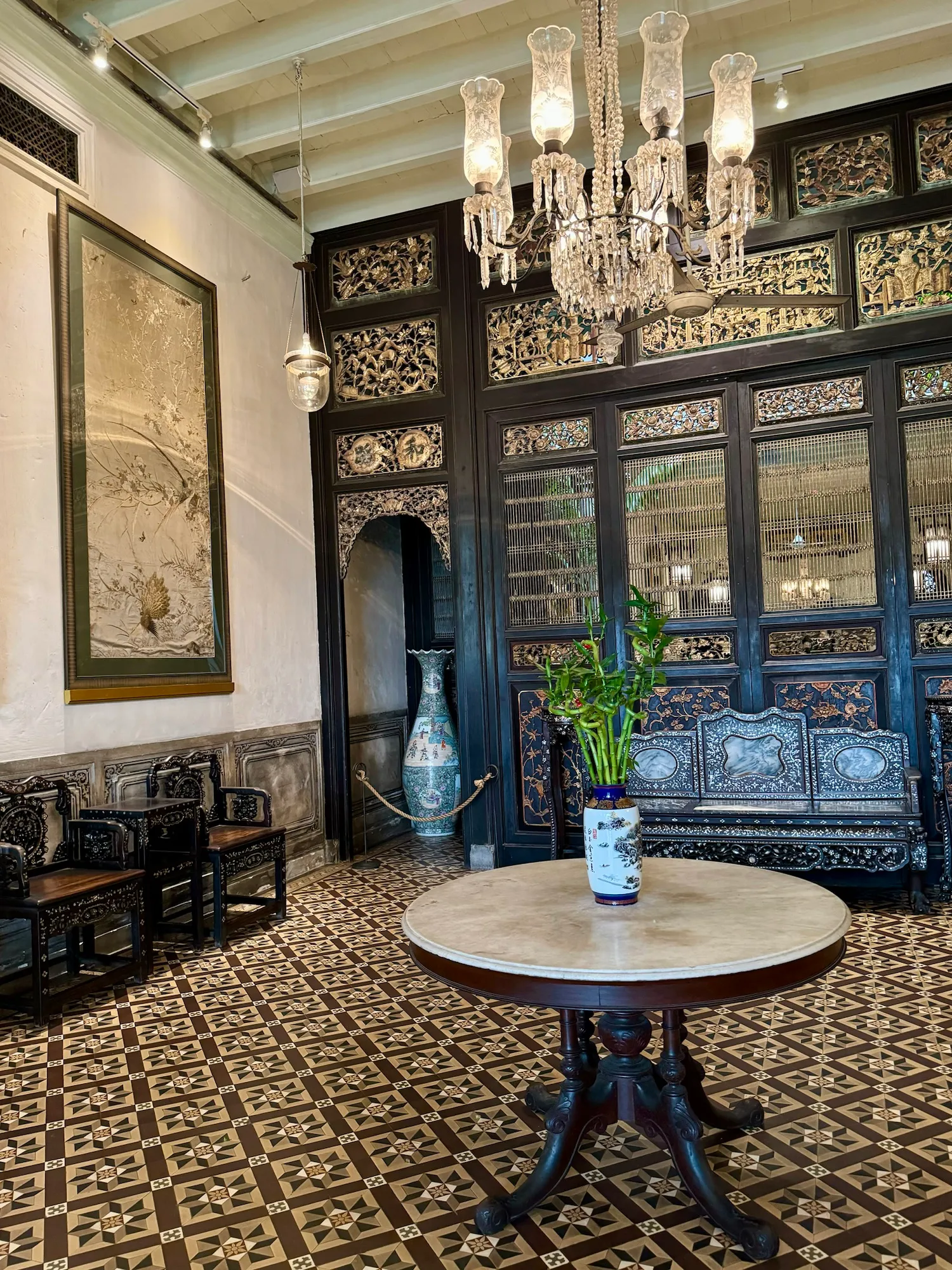
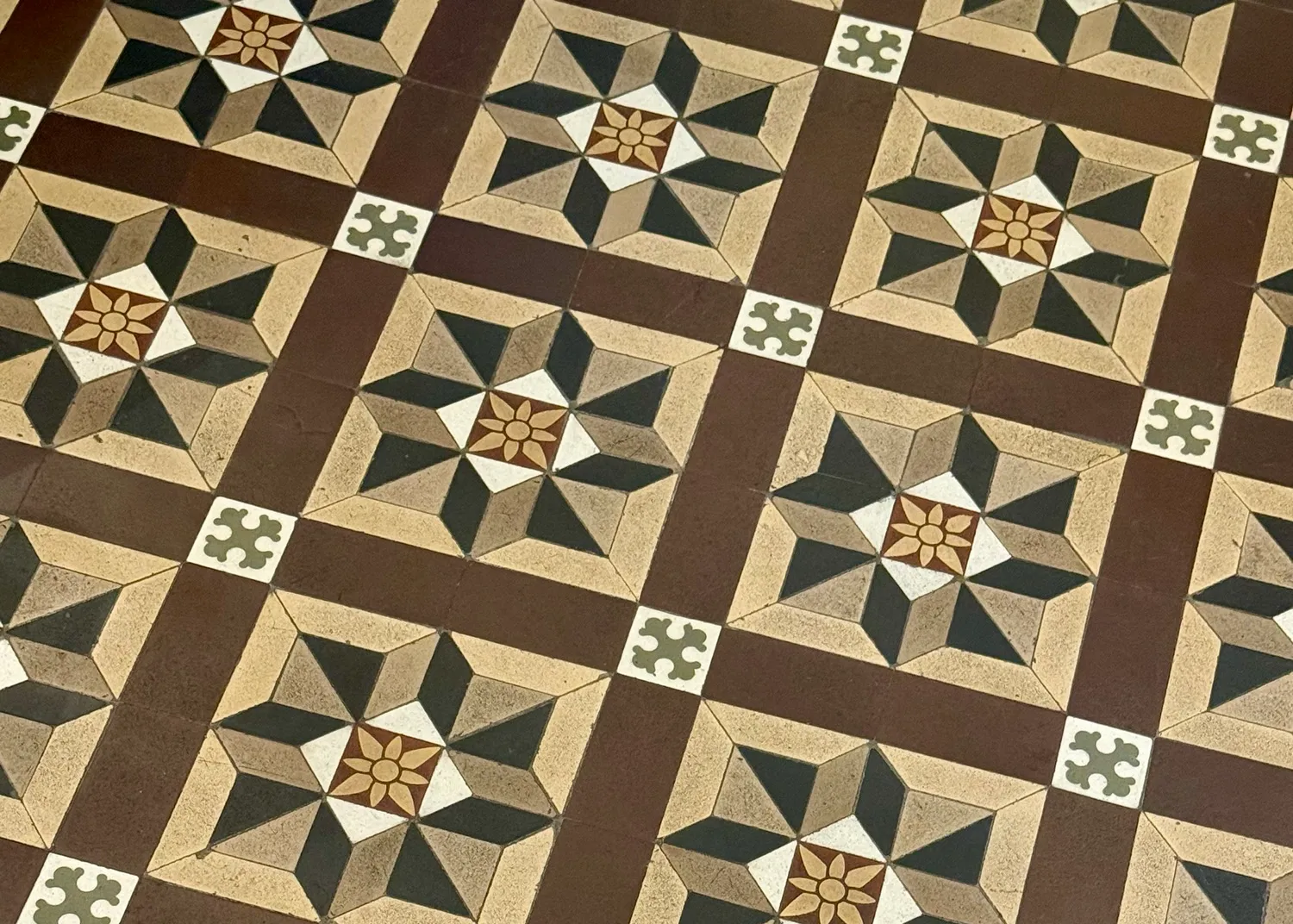
Even CFT, with all his power and riches, couldn’t control everything. The English tiled floors were laid entirely by hand—flawless at first glance… until you spot the one sneaky mistake.
One tile is rotated the wrong way. Was it a careless slip? A hidden message? Or just proof that perfection is overrated? Either way, it adds charm—and a fun little Easter egg for the eagle-eyed.
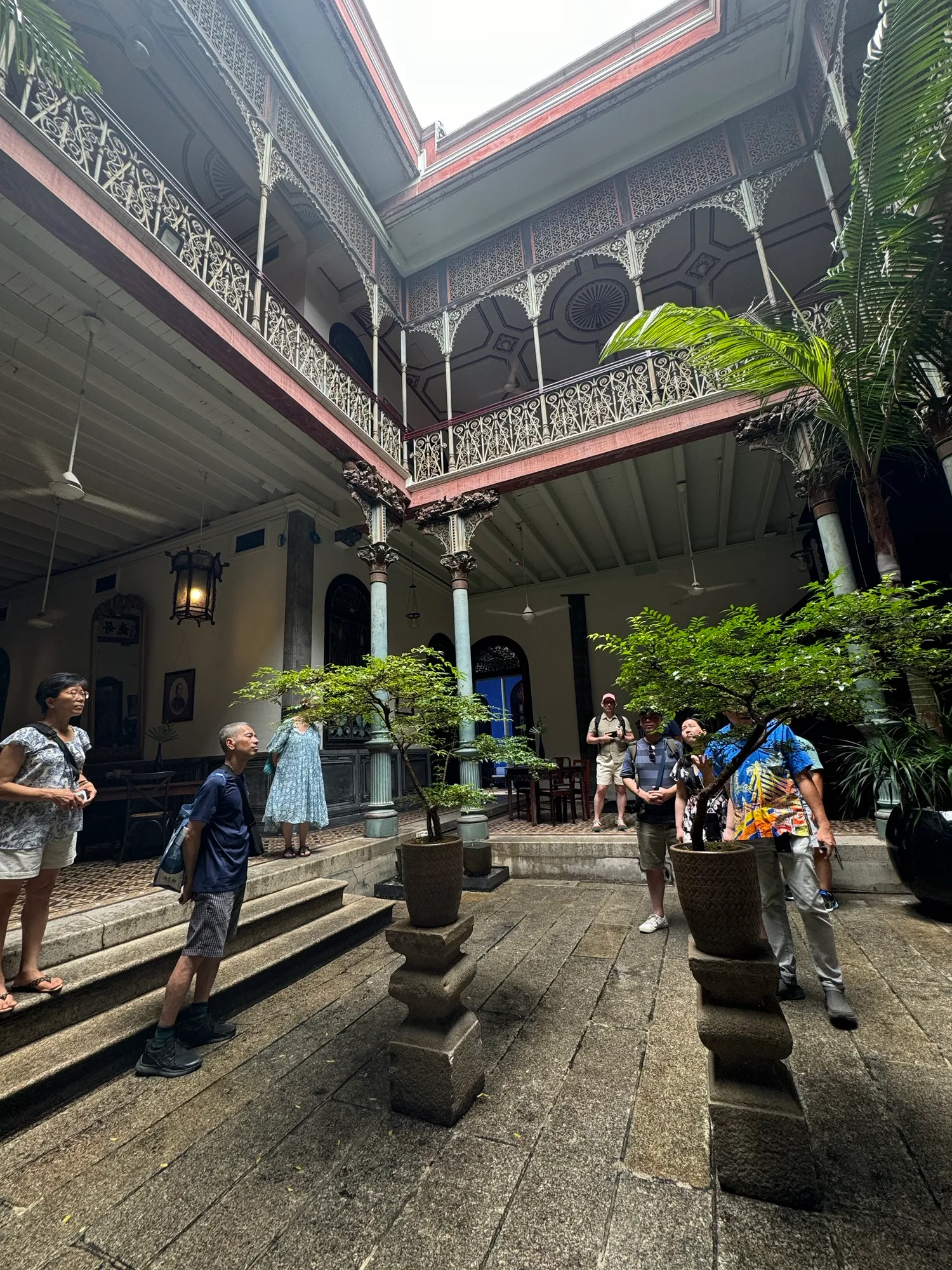
CFT blended East and West effortlessly, from the intricate carvings to the imported floor tiles—he was doing fusion before it was cool.
And let’s talk feng shui. Every detail was designed to invite good vibes: the house faces south (for prosperity), has a central courtyard for energy flow, and even the rainwater is channeled to symbolize wealth. From the earthy tiles to the iconic blue walls, the mansion isn’t just built—it’s balanced.
The tour guide at the Blue Mansion was fantastic—informative, witty, and engaging. They pointed out fascinating details that really brought the history and design of the mansion to life. I’d definitely recommend including the mansion tour in your itinerary (Just make sure you check your time 💩)
Peranakan Mansion
Next on my Peranakan deep dive: the Pinang Peranakan Mansion—a green cousin to the Blue Mansion, because apparently, heritage comes in colour-coded options. Located on Church Street, not far from Swettenham Pier, this place is a whole vibe of 19th-century opulence.
From the outside, it looks like Cheong Fatt Tze’s fashionable sibling who went with emerald instead of indigo. Step inside, and it’s a treasure trove of ornate furniture, delicate antiques, and enough bling to make you wonder if the Peranakans invented maximalism.
They offer guided tours (which I totally skipped—oops), but in hindsight, it would’ve helped make sense of all the sparkle and ceremony. So take my advice: if you want the stories behind the glam, join the tour. Otherwise, you’ll just wander around thinking, “Wow, that’s fancy,” every five steps.
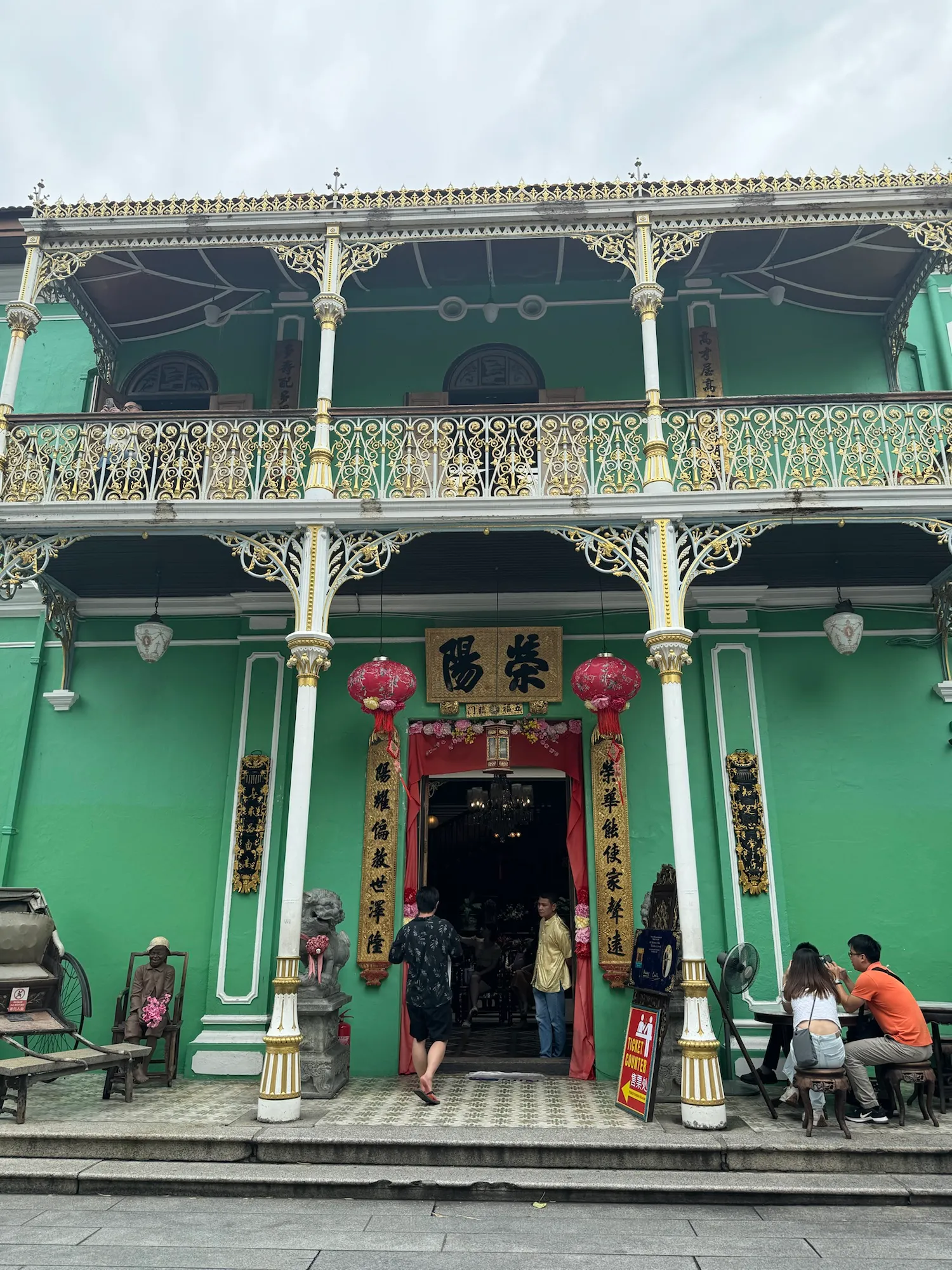
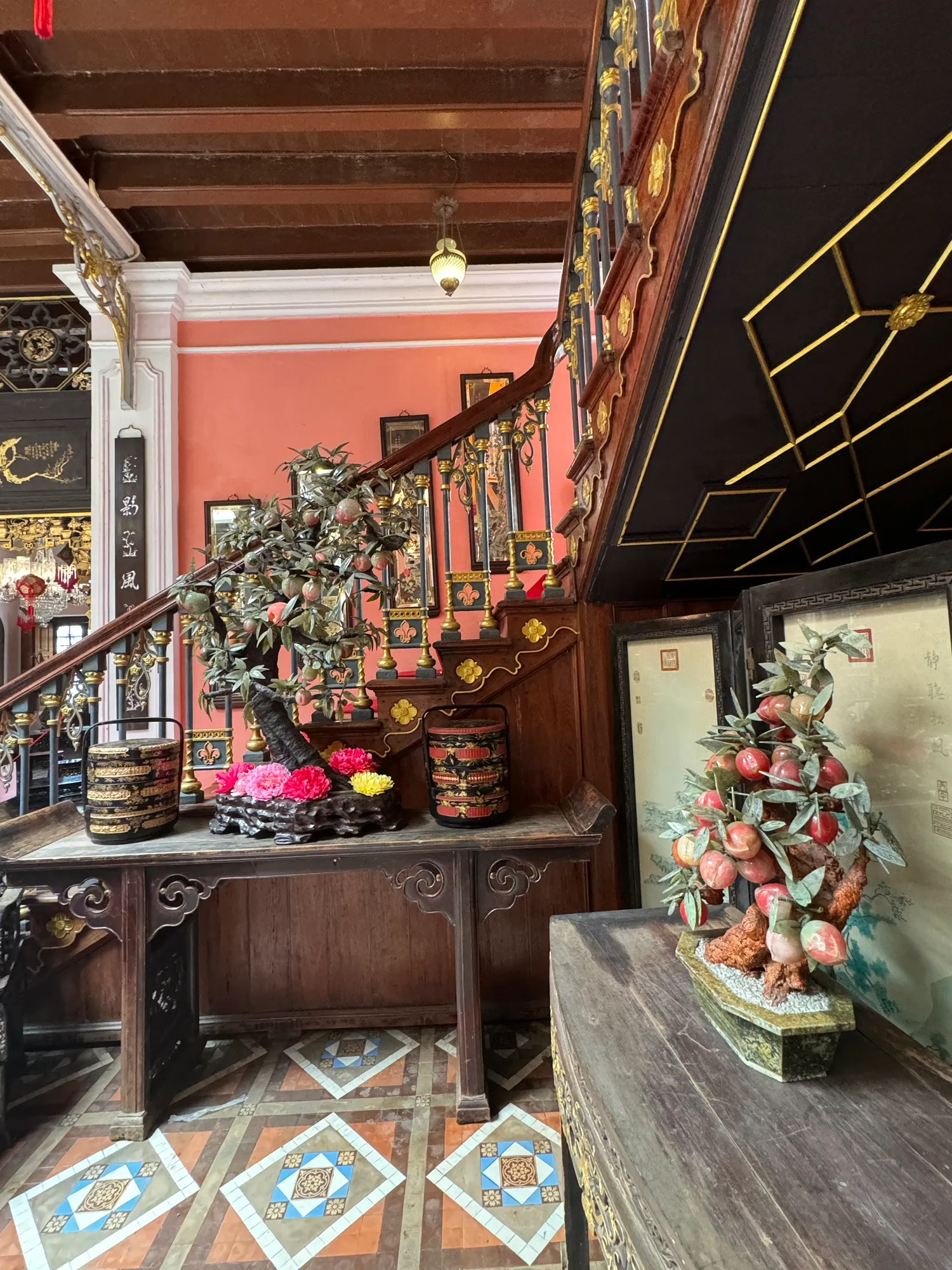
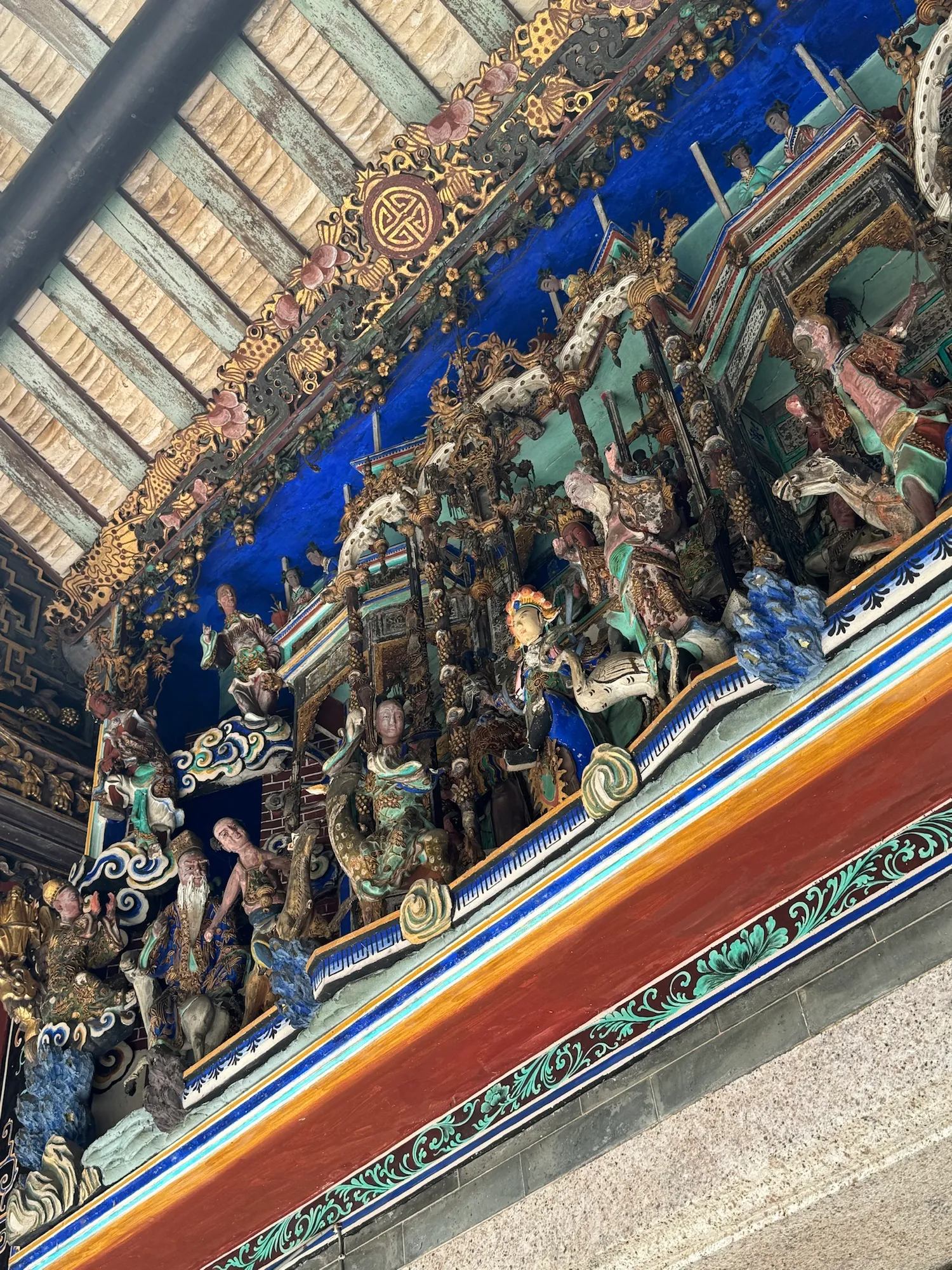
After marinating in the rich, maximalist world of Peranakan culture, I figured it was time for a reset—so I wandered over to Norm Micro Roasters for a much-needed afternoon pick-me-up (read: a coffee break disguised as cultural recovery).
Norm Micro Roasters
Famous for its killer tiramisu and minimalist warehouse vibes, Norm is basically the design detox my eyes needed. This place is so understated, you could easily walk past it—think subtle signage and a discreet entrance that’s practically playing hard to get. But once inside, it’s calm, cool, and caffeinated bliss. Just a 3-minute stroll from the mansion, it’s the perfect visual palate cleanser after soaking in all that ornate heritage. Maximalism detox: complete.
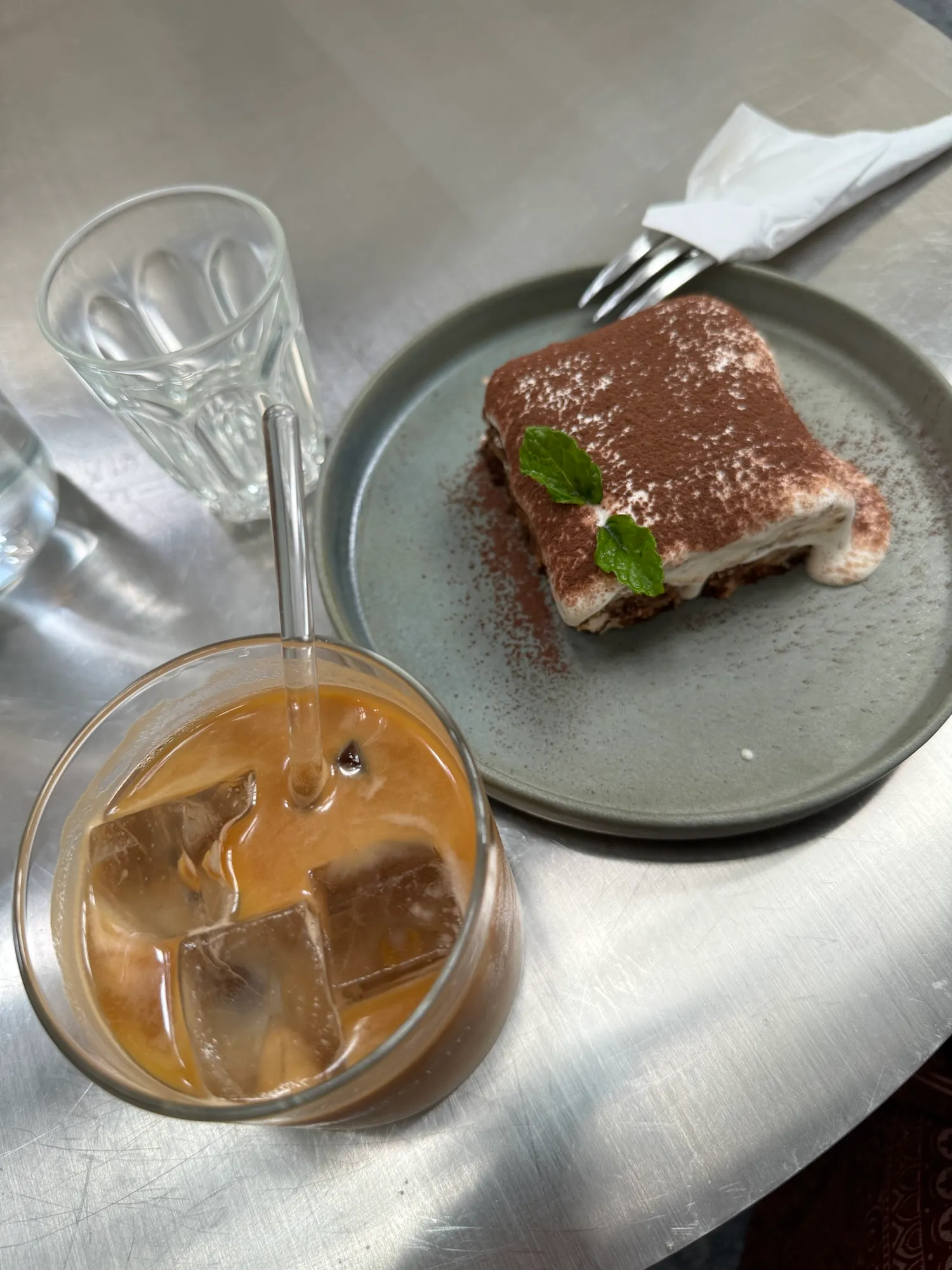
After a little chill session, I headed back to the hotel to freshen up for my Peranakan dining experience at Kebaya. But then—plot twist—pastry happened.
Out of nowhere, like a buttery mirage, Ming Xiang Tai Pastry Shop appeared.
Its bold red sign and “Freshly Baked Daily” banner basically shouted at my tired, still-peckish self to come closer. Inside? Rows of golden brown pastries lined up like tiny, flaky temptations. I told myself I’d just look—and promptly walked out with two in hand: a pineapple and mango pie and a pandan kaya puff.
Because self-control? Yeah… she didn’t make this trip.
And let me tell you—no regrets. The pastry was nutty, just sweet enough, and the fillings were spot-on: flavourful but not overpowering. I made a mental note right then and there to return the next day… and yes, I ended up buying a whole box to lug back to Sydney. Priorities.
After freshen up. It was time to head to Kebaya Dining Room. The restaurant is located inside of beautiful peranakan mansion converted to hotel, Seven Terrace. The Kebaya Dining Room exudes a romantic and elegant ambience, blending colonial charm with Peranakan heritage in a richly decorated heritage setting.
Kebaya Dining Room
I made a reservation in advance—because let’s face it, Kebaya Dining Room is the place for tourists. Toss in a Michelin Guide listing, and you’ve got a perfect storm of demand. The menu’s got a simple structure: “To Begin,” Protein, Greens, and Dessert. You can go for a two- or three-course option, or toss in extra dishes to share if you’re feeling social. Since I was flying solo, I stuck to one choice from each category for the three-course experience.
Here’s what I went for:
- Otak-Otak
- Tamarind-glazed beef
- Masak Lemak
- Pisang Goreng ice cream & cake
I know, it sounds like a lot for one person—and YES, when the food arrived, the portions were generous enough to feed a small army!
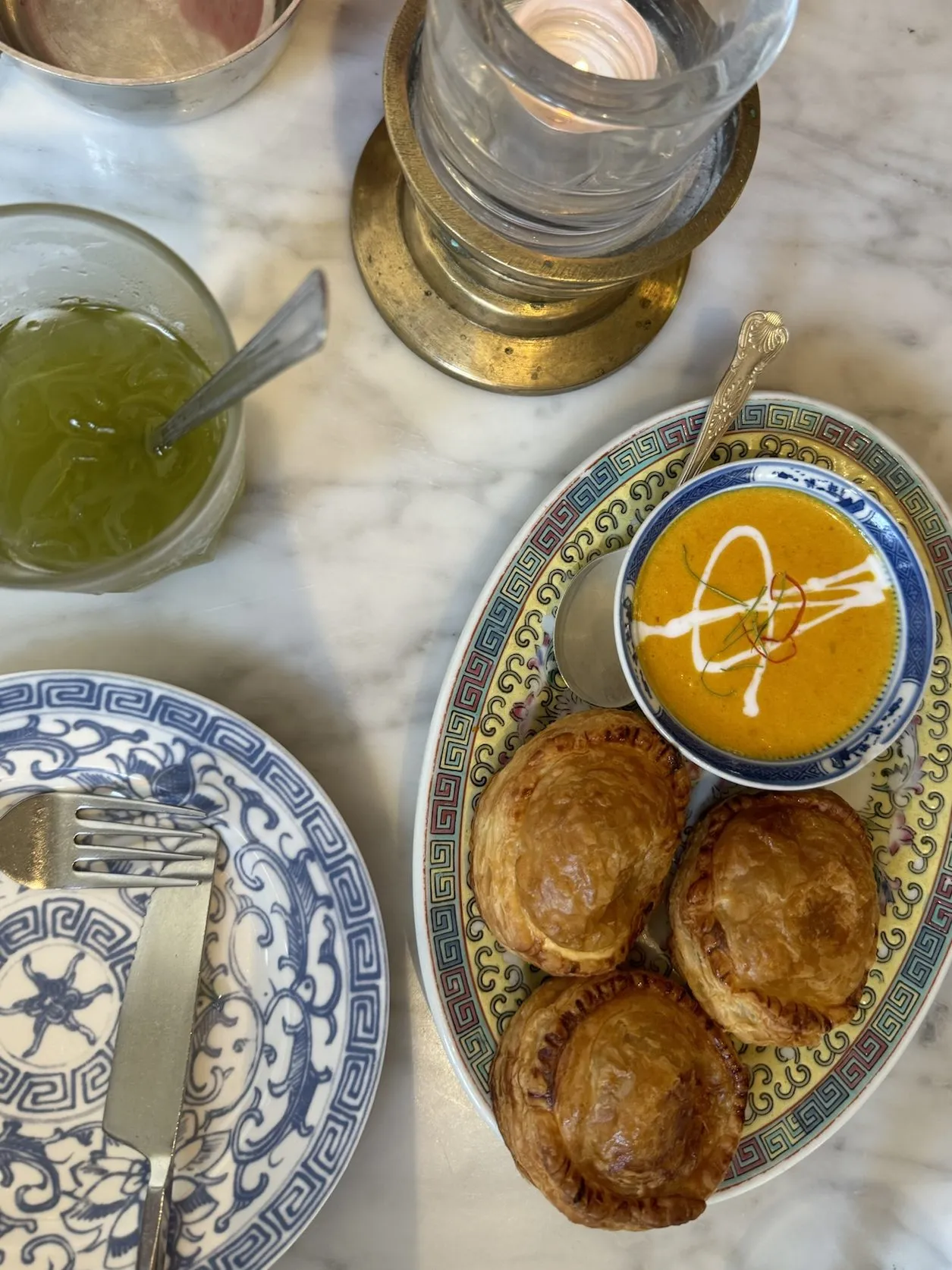
Let’s start with the Otak-Otak. Three golden, crispy pastries, stuffed with what I can only describe as a “mystery delight.” It’s savory, but hidden under layers of puff pastry and satay sauce that somewhat took over the delicate Otak Otak flavor. Honestly, I felt like I was at an event eating those mini pastries, and while modern, the balance was a little off. I had to peel off some pastry layers to taste the real star.
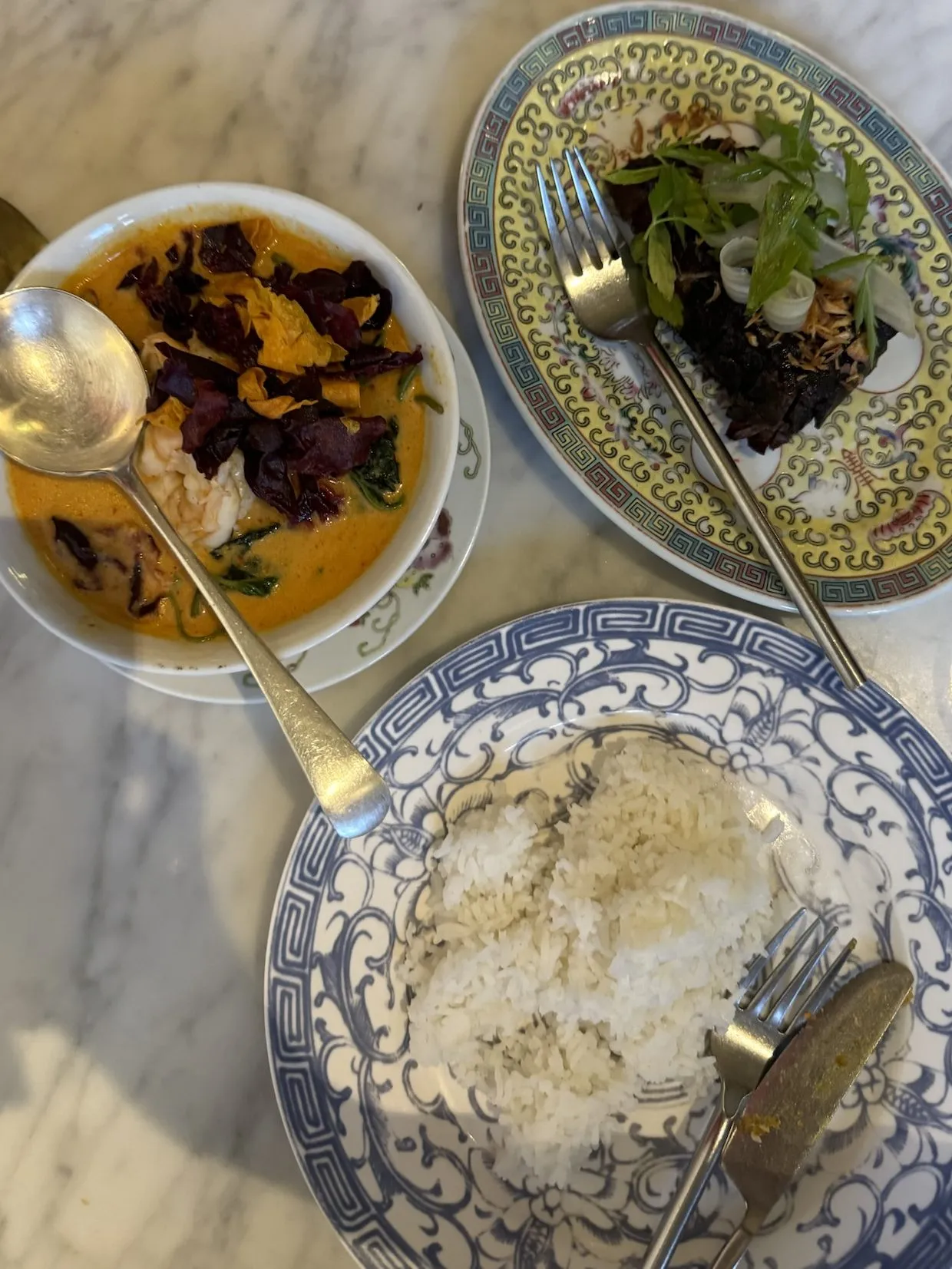
Now, onto the Tamarind-glazed beef. Meh. Nothing to write home about, honestly. It wasn’t terrible, but it wasn’t anything to remember, either. The buah keluak chili jam on the side gave the beef an upgrade (even if the beef was a tad dry and overcooked).Then came the Masak Lemak—a surprisingly interesting dish. It’s a veggie curry with sweet potato shoots, which, let’s be real, I had zero clue what that would taste like. The curry had a nice kick. It was interesting experience overall as I’ve never knew Sweet Potato slips/shoots are edible (and apparently nutritious!).
After stuffing myself silly with these hearty dishes, it was finally dessert time—Pisang Goreng. If you’re familiar with Southeast Asian food, you know it’s just fried banana. But this wasn’t your street vendor version—it was reinterpreted into a fritter cake. The first bite reminded me of banana bread with a slightly denser texture. A fun twist on a classic!
Overall, I enjoyed my experience at Kebaya Dining Room—it’s a solid introduction to Peranakan cuisine, especially for those who are new to it and want to dip their toes in without any surprises. The dishes are elevated, approachable, and easy to digest (metaphorically and literally). That said, if you’re feeling adventurous and prefer the real deal, some of the menu items can likely be found at street vendors and local eateries, where authenticity reigns supreme. Who needs fancied-up versions when you can go straight to the source, right?
With a happily stuffed belly, I took a little stroll to walk it off before calling it a night. Georgetown at night has its own charm—and here are a few snapshots I managed to capture along the way :)
Night Karaoke session
As I made my way back, Lebuh Kimberly was still alive with energy—street food sizzling, vendors calling out, and locals and tourists alike soaking up the night. As tempting as it was to join the street food crowd for just one more bite, I decided to call it a night—tomorrow promised another big day of exploring a different side of George Town. Time to rest, recharge… and make a little more room.